There are no items in your cart
Add More
Add More
| Item Details | Price | ||
|---|---|---|---|

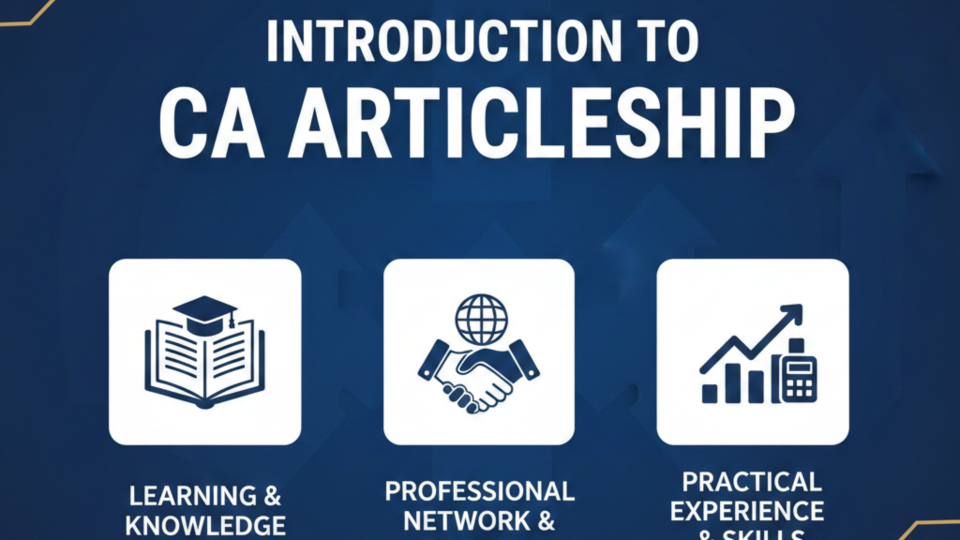
SEGMENT 1: INTRODUCTION AND OVERVIEW OF CA ARTICLESHIP
Imagine you are on the journey to becoming a Chartered Accountant (CA). You study hard, clear exams, and master various theoretical concepts. But an important question remains—how do you apply all this knowledge in the real world? This is where CA Articleship plays a crucial role. It is the practical, real-life training phase of a CA’s professional journey.
What is CA Articleship?
CA Articleship acts as a bridge between academic learning and professional practice. In classrooms, you understand the what and why of subjects like accounting, auditing, and taxation. During articleship, you learn the how—how these concepts are applied in real situations.
This training period is mandatory for every CA student. For about three years, students work under the guidance of an experienced Chartered Accountant. During this time, you gain hands-on exposure by working on real assignments and clients. You may review actual financial statements, prepare tax returns, assist in audits, and participate in client meetings.
Articleship helps you understand client requirements, handle responsibilities, and experience the day-to-day challenges faced by CAs. It transforms theoretical knowledge into practical skills, preparing you for a successful professional career.
Why is Articleship So Important?
Articleship is like learning to drive by actually sitting behind the steering wheel. Reading about driving rules is not enough—you need real driving experience to truly learn. In the same way, articleship gives CA students practical exposure that books alone cannot provide.
For instance, while conducting an audit, you may identify an error in a company’s financial records. It then becomes your responsibility to investigate the issue, analyze the root cause, and help resolve it. This process develops critical thinking, problem-solving abilities, and attention to detail—skills that are essential for a Chartered Accountant.
Articleship is not limited to technical learning. It also helps you develop soft skills such as communicating with clients, meeting deadlines, and managing work pressure. Over time, these experiences build confidence, professionalism, and a strong work ethic—qualities that are highly valued by employers and vital for long-term success in the CA profession.
Your CA Journey Begins
Beginning your articleship can be both exciting and challenging. You are no longer just a student—you become part of a professional team, contributing to work that truly matters. This phase teaches you responsibility and gives you a real understanding of what it means to be a Chartered Accountant.
During articleship, your focus goes beyond preparing for exams. You are gaining practical knowledge and skills that will shape your long-term career. Although the journey may be demanding at times, articleship plays a crucial role in your professional growth. It is the foundation that prepares you and opens the door to a successful future as a CA.
SEGMENT 2: CHOOSING THE RIGHT FIRM FOR ARTICLESHIP
Now that you understand why articleship is essential, the next step is choosing the right place to complete it. Selecting an organization for articleship is like choosing the right foundation for your professional growth. Each organization offers a unique learning experience, so it is important to understand what different types of firms can provide.
Types of Firms for Articleship
Big Four firms, mid-size enterprises, and small firms are the three main categories of businesses. Let's examine each one in detail.
1. Big 4 Firms
The Big Four firms—Deloitte, PwC, EY, and KPMG—are the biggest accounting firms in the world. Being a member of a high-performance professional team is comparable to working for a Big Four firm. You are exposed to sizable clientele, challenging tasks, and organized training courses.
However, there are frequently long workdays and strict deadlines in this setting. Big Four companies are a great option for people looking for a fast-paced, competitive work environment and who want to learn about global standards and industry best practices.
2. Mid-size Firms
A balanced experience is provided by mid-size businesses. Although their clientele may not be as large as that of the Big 4, they often offer a greater range of services. You'll probably be able to manage a variety of tasks and might receive more direct supervision from seniors in a mid-size company. If you want to gain exposure to a variety of fields without the strong pressure of the Big 4, this kind of firm can be an excellent option.
3. Small Firms
If you want practical experience with a lot of responsibility from the beginning, small businesses are the ideal choice. You can attempt a variety of tasks and engage directly with clients because these companies deal with smaller clients. You may even oversee whole projects in tiny businesses. It's an excellent option if you want to pick things up quickly and don't mind trying new things. Every kind of business has benefits and drawbacks. It's crucial to decide what you want from your article report and what will help you reach your career objectives.

How to Choose the Right Firm
1. Know Your Goals: Consider what kind of experience you want. If you’re aiming for a high-profile job in the future, a Big Four firm might be a good choice. A mid-size firm could work well if you want a mix of tasks and a balanced work life. And if you want to gain broad skills quickly, a small firm might be perfect.
2. Do Your Research Before applying, take time to research different firms. Use platforms such as LinkedIn, the ICAI job portal, and your personal network to gather information. Speaking with fellow CA students or seniors can also give you valuable insights into the work culture, learning opportunities, and overall environment of each firm.
3. Location and Area of Expertise Location can play an important role in your articleship experience. Choosing a firm close to your residence can help reduce travel time and unnecessary stress. Additionally, consider your areas of interest—such as taxation, auditing, or finance—and select a firm that offers strong exposure in the field you wish to specialize in.
4. Interview Preparation Once you have shortlisted firms, it is time to prepare for interviews. Remember, an interview is not only for the firm to assess you, but also for you to determine whether the organization is the right fit. Be ready to discuss your strengths, interests, and career goals, and explain why you believe you are suitable for the role. Show enthusiasm, a willingness to learn, and readiness to take on challenges.
Choosing the right firm is crucial, as it will shape your articleship experience and professional development. Whether you select a Big Four firm, a mid-sized firm, or a small practice, what truly matters is finding a place that aligns with your goals and allows you to grow. Keep in mind that the firm you choose will lay the foundation of your CA career, so make this decision thoughtfully and carefully.
Segment 3: Making the Most of Your Writing Experience
Once you have selected the right firm, articleship becomes the phase where you gain the maximum real-world exposure. Although articleship can be demanding, it is the most valuable and transformative part of the CA journey. This stage builds confidence, sharpens professional skills, and prepares you to face real-life challenges as a Chartered Accountant. Let us discuss how you can make the most of your articleship experience.
1. Be Curious and Ask Questions
At the beginning of articleship, it is natural to feel confused or overwhelmed. You are not expected to understand everything immediately—and that is completely fine. Never hesitate to ask questions. Asking questions reflects curiosity, interest, and a genuine desire to learn. Remember, your seniors were once in your position and understand the learning curve. For example, if you are auditing financial statements and find something unclear, asking your supervisor for clarification will help you build a strong conceptual foundation.
2. Take on New Challenges
During articleship, you will be assigned various tasks, some of which may seem challenging or unfamiliar. Embrace these opportunities. If your senior offers you the chance to handle part of an audit independently or work on a new assignment, accept it. Stepping out of your comfort zone accelerates learning, builds confidence, and strengthens problem-solving and time-management skills—qualities that are essential for a successful CA career.
3. Master Time Management
One of the biggest challenges during articleship is balancing professional work with exam preparation. Tight office deadlines along with academic responsibilities require effective time management. Creating a daily or weekly schedule can help allocate dedicated time for both work and study. With consistent practice, you will learn how to manage multiple responsibilities efficiently. Time management is a lifelong skill that will benefit you throughout your career as a CA.
4. Focus on Building Professional Relationships
Articleship is not only about completing tasks and meeting deadlines; it is also about building strong professional relationships. Maintain positive connections with colleagues, seniors, and clients. A supportive work environment makes it easier to seek guidance and feedback. Moreover, these professional relationships can prove valuable in the future. People remember individuals who are hardworking, reliable, and pleasant to work with—so always aim to leave a positive impression.
5. Keep Learning and Improving
Every day during articleship offers a learning opportunity. Even routine tasks such as verifying invoices or reconciling accounts can teach valuable lessons. Continuously ask yourself how you can improve accuracy, efficiency, and understanding. Small improvements made consistently lead to significant growth over time. Maintaining a learning notebook—where you jot down new concepts, terms, or experiences—can help you track your progress and recognize how much you have evolved.
6. Do Not Neglect Your Exams
While articleship provides practical exposure, clearing CA examinations remains equally important. Set aside regular time for studies alongside office work. Consistent preparation will reduce last-minute pressure and improve exam performance. A balanced approach to practical training and academic learning is key to success.
By following these practices, you can truly maximize your articleship experience. Remember, articleship is not just a mandatory requirement—it is an opportunity to develop skills, build professional relationships, and gain the confidence needed to excel as a Chartered Accountant. Every task, challenge, and lesson you encounter during this phase brings you one step closer to becoming a competent, ethical, and successful CA.


SEGMENT 4: LIFE AFTER ARTICLESHIP – PREPARING FOR A SUCCESSFUL CA CAREER
Congratulations! After months—or even years—of dedication and hard work, you are finally approaching the completion of your articleship. This is an exciting phase, as you are now very close to achieving your dream of becoming a Chartered Accountant. However, as one journey ends, an important question arises: What comes next? How can you use the experience you have gained to build a successful professional career? Let’s explore the next steps to help you transition smoothly into the next stage of your CA journey.
1. Review Your Articleship Experience Before Moving Forward
Before stepping into your next role, take time to reflect on your articleship journey. Think about the assignments you handled, the skills you developed, and the challenges you overcame. Ask yourself: Which areas did you enjoy the most? Where did you perform best? Identifying your strengths and interests will help you make informed career decisions.
For instance, if you enjoyed audit assignments, you may consider specializing in auditing. If taxation interested you more, you can focus on building a career in tax practice. Reflecting on your articleship experience will give you clarity about the type of CA role you want to pursue in the future.
2. Get Ready for the Final CA Exams
The last stage in becoming a chartered accountant is passing the Final CA exams. Strong conceptual and theoretical preparation is necessary for success in the final tests, even though an articleship offers invaluable practical experience. As your articleship draws to a close, turn your attention to thorough revision.
Make use of the time you save from your regular office duties to focus on your exam preparation. Make a well-organized study schedule and stick to it. Edit your articleship notes, thoroughly review the criteria, and focus especially on the subjects you found difficult during training. Numerous professional prospects can be unlocked by passing the final exams with disciplined work and dedicated preparation. Try your hardest and approach this phase with self-assurance and resolve.
3. Examining Employment Possibilities
You can pursue a variety of employment options after passing the final CA exams. There are numerous career options in the field, each offering distinctive experiences and opportunities for advancement. Among the important choices are:
Corporate Roles: A lot of chartered accountants decide to work for big companies, where they oversee finance, audits, taxation, risk management, and compliance. Corporate positions can offer exposure to strategic decision-making, a disciplined work environment, and steady career advancement.
Professional Practice: Opening your own CA practice is a common choice if you like autonomy and face-to-face communication with clients. Managing audits, tax filings, advice services, and compliance tasks while cultivating enduring client relationships is possible with this route.
Specialized Roles: CAs can also specialize in niche areas such as forensic accounting, mergers and acquisitions, international taxation, or financial advisory services. These roles require in-depth expertise and often involve higher levels of responsibility, complexity, and professional recognition.
4. Developing Your Reputation and Networking
In the fields of accounting and finance, networking is essential. Engage at industry events, make connections with other professionals, and maintain contact with the individuals you collaborated with throughout your articleship. You may find employment prospects, get advice, and keep up with the most recent developments in the business with the support of strong professional networks.
Developing a solid professional reputation is equally crucial. Having a reputation for professionalism, honesty, and dependability will help you in the long term, whether you decide to work for a company or manage your own practice. The relationships you establish early in your profession could eventually develop into dependable mentors, clients, or coworkers.
5. Continue to Learn and Develop
The pursuit of knowledge does not end with being a chartered accountant. The banking industry is always changing, with new rules, tools, and industry standards appearing on a regular basis. Attend conferences, seminars, and professional courses to stay current, or get more certifications.
You can take on more challenging positions, stay competitive, and adjust to changes in the industry by continuing your education. Additionally, it increases confidence because being up to date guarantees that your knowledge and abilities remains solid and applicable.
6. Accept Your Chartered Accountant Role
Lastly, keep in mind that being a chartered accountant is about entering a respected and responsible profession rather than only landing a job. Stakeholders, organizations, and clients will trust you with critical financial decisions and rely on your expertise.
Be proud of the effort and commitment that led you to this point. Whether you decide to work in the business sector, launch your own practice, or specialize in a particular topic, life following articleship provides countless opportunities. Your career will be guided by the knowledge and expertise you acquired during your articleship. As a CA, you have a significant impact on financial success and stability, so keep learning, developing, and making valuable contributions. You've only just started your quest, and future is yours to define.

 Launch your Graphy